We will be closed from 26th November till 25th December 2026
We will be closed from 26th November till 25th December 2026

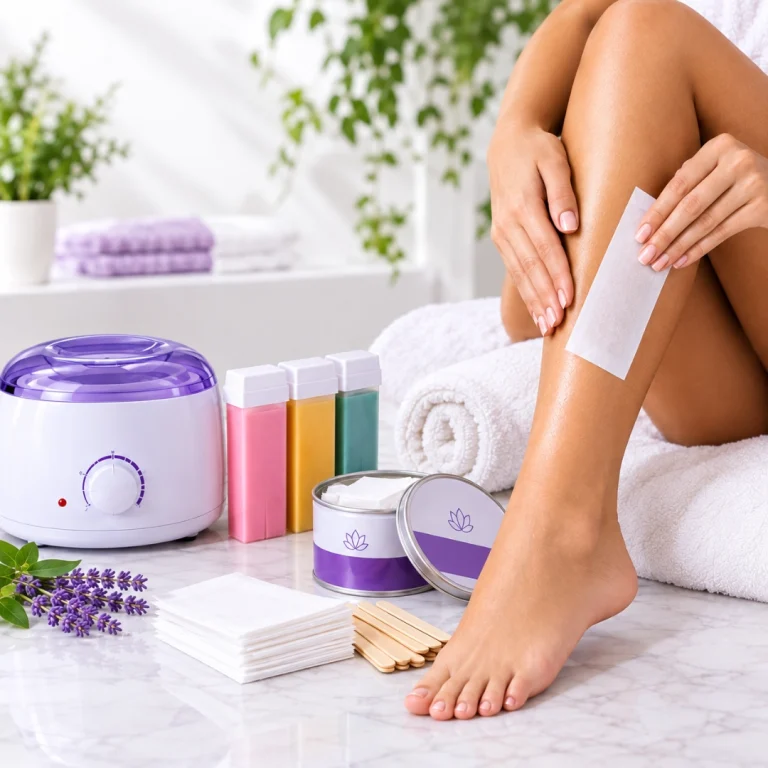
Want smooth, hair-free skin without regular salon appointments? Learning how to wax at home can be a convenient and cost-effective way to manage unwanted body hair. With the right waxing products, a little preparation and the correct technique, beginners can build a simple hair-removal routine from home.
If you are wondering whether hot wax or roll-on wax is better, or whether cold strip wax tins are easier for beginners, this guide explains the differences, which method to consider for different body areas, and how to wax more safely.
At Glamouriche, we offer waxing essentials to help you create your own at-home waxing setup, including waxing kits, wax heaters, roll-on wax cartridges and waxing accessories.
Before choosing a waxing method, it helps to understand how each option works. The best choice depends on the body area, your experience, your skin’s sensitivity and the instructions supplied with your chosen wax.
Hot wax is heated in a suitable wax warmer and applied to the skin using a spatula. Depending on the formulation, the wax sets as it cools and is removed without wax paper strip.
Hot wax is commonly used for areas where precision is important, including the eyebrows, upper lip, underarms and bikini line. However, beginners should take extra care with sensitive areas, and intimate waxing.
What to consider: Hot wax requires careful temperature control. Wax should be melted and applied at the correct temperature. Incorrect application or removal can irritate or cause sensitivity to the skin.
What you need: A compatible hot wax warmer, suitable hot wax, a spatula and the appropriate pre-wax and post-wax products.
Explore the Glamouriche Waxing Category to find waxing essentials for your routine. https://glamouriche.co.za/product-category/waxing-equipment-wax-products/
Roll-on waxing uses a cartridge containing soft depilatory wax fitted with a roller head. The cartridge is placed inside a compatible wax heater, which warms the wax so it can spread evenly across the skin.
The roller applicator helps distribute a thin layer of wax, usually in the direction of hair growth. A suitable waxing strip is then pressed onto the wax and removed according to the product instructions.
Roll-on wax is a popular option for beginners because the roller head makes application straightforward, especially on larger areas like legs, arms, tummy and back.
What to consider: Roll-on wax generally requires paper or non-woven waxing strips. The cartridge must be compatible with the heater, and the wax must be at the correct working temperature.
What you need: A compatible roll-on wax heater, wax cartridge, waxing strips and suitable pre-wax and post-wax products.
Glamouriche offers wax heaters and cartridges to help you put together your at-home roll-on waxing kit.
Cold strip wax comes in a 400g or 800g wax tin. The strip wax tin needs to be heated in a wax pot heater, spread thinly with a spatula and removed with waxing strips.
Using a spatula, spread a thin layer of wax onto the area to be treated in the direction of the hair growth. Press waxing strip paper onto the waxed area. Pull off the waxing strip with a firm action against the direction of the hair growth.
What to consider: Cold strip wax using the tin takes time to apply and can be messy. This wax method requires careful handling of the wax on application as the wax needs to be applied very thin to the skin. The application from the wax tin using a spatula to the skin can be very messy and requires practise.
What you need: Wax pot heater, cold / strip wax tin, wax paper and any recommended pre and aftercare products.
There is no single method that works best for everyone. Use the following guide as a starting point, while always checking that your chosen product is suitable for the area you intend to wax.
There is no single method that works best for everyone. Use the following guide as a starting point, while always checking that your chosen product is suitable for the area you intend to wax.
| Body area | Method to consider | Why |
|---|---|---|
| Legs | Roll-on wax or cold strip wax | Convenient for larger areas |
| Arms | Roll-on wax or cold strip wax | Easy application over relatively flat skin |
| Underarms | Suitable hot wax or cold strip wax | Allows more controlled application on a curved area |
| Upper lip | Suitable hot wax or cold strip wax | Offers targeted application |
| Eyebrows | Suitable facial hot wax or cold strip wax | Helps with precise shaping |
| Bikini line | Suitable bikini / intimate area hot wax | Allows controlled application around a sensitive area |
| Brazilian area | Suitable brazilian / intimate area hot wax | Skin is delicate and the technique requires care |
Remember that wax formulations differ. Do not assume that a product suitable for legs is also suitable for facial or intimate areas.
If you have sensitive skin, choosing a wax labelled for your intended area is important, but the wax type alone cannot guarantee that you will avoid irritation.
Hot wax is often selected for smaller, sensitive areas because stripless formulations can be applied and removed differently from soft strip wax. However, hot wax can still cause burns, irritation or skin lifting.
Roll-on wax and cold strips can also irritate sensitive skin, particularly if the wax is removed repeatedly from the same area.
Before waxing:
If you have a skin condition, diabetes, reduced sensation or concerns about your skin’s ability to heal, ask a healthcare professional whether waxing is appropriate.
What You Need to Wax at Home
Before starting your first waxing session, prepare your workspace and gather your supplies.
Your basic waxing setup may include:
You can browse the Glamouriche Waxing Category for waxing kits and accessories, including wax heaters and roll-on cartridges.
Hair needs to be long enough for the wax to grip it. As a general guide, approximately 5 mm of growth is often suitable, although requirements vary by product.
If the hair is excessively long, carefully trim it before waxing rather than attempting to remove a large amount of hair in one go.
Wash the area gently and dry it thoroughly. Oils, sweat, lotions and moisture can interfere with wax application.
Follow the instructions for any pre-wax cleanser or preparation product you use.
For hot wax, roll-on wax and cold strip wax, follow the heater and wax manufacturer’s instructions. Allow the wax to reach its recommended working consistency.
Never guess the temperature or assume that wax is safe because it looks ready.
Always test heated wax before applying it to a larger area. Follow the product instructions and check a small amount carefully. It should not feel painfully hot or burn the skin.
If the wax is too hot, do not apply it. Allow it to cool to the recommended working temperature before testing again.
For most roll-on and soft strip-wax products, apply a thin, even layer in the direction of hair growth. Press the waxing strip firmly onto the wax and smooth it in the same direction.
For stripless hot wax, follow the particular formulation’s instructions, as application and removal differ from roll-on wax.
Work in small sections until you become comfortable with the process.
Hold the skin taut and remove the strip or set wax according to the product’s instructions. Where the method calls for a strip, pull it quickly and close to the skin rather than lifting it straight upwards.
Avoid repeatedly waxing the same area, as this can increase irritation and skin damage.
Once waxing is complete:
Mild redness may occur temporarily. Seek medical advice if you develop significant swelling, blistering, signs of infection or redness and irritation that persist for more than two days.
Overheated wax can burn your skin. Use the recommended heater settings and always check the temperature before application.
Wax may not grip hair properly when the skin is damp or covered with skincare products. Start with clean, dry skin.
A product designed for legs may not be suitable for facial or intimate areas. Check the label before using any wax.
When using a strip-wax method, remove the strip close and parallel to the skin, following the product directions. Pulling upwards can increase discomfort and skin trauma.
Repeated waxing can leave the skin sore, irritated or damaged. Stop if the skin becomes increasingly red, tender or begins to lift.
Very short hair may not be gripped effectively. Allow sufficient growth before waxing again rather than repeatedly applying wax to the same area.
Certain acne treatments and medicines can make the skin more fragile. Check with a healthcare professional before waxing if you use prescription retinoids, isotretinoin or other treatments that affect the skin.
Freshly waxed skin can be more sensitive to heat, friction and skincare ingredients. Gentle aftercare is an important part of your waxing routine.
If you are new to home waxing, start by deciding which body area you want to wax and how often you expect to do it.
Roll-on waxing kit if: You mainly want to wax your legs or arms and larger areas and prefer a convenient applicator with waxing strips.
Hot wax kit if: You want to work on smaller, sensitive areas like face, under arms and bikini / intimate areas.
Choose cold strip wax if: You are a professional beauty therapist or have practise and familiar using the strip wax tin method.
For many beginners, roll-on waxing is a practical way to start with larger body areas and the hot wax method is suitable for smaller body area waxing.
Ready to start your at-home waxing routine? Glamouriche offers waxing essentials to help you choose products suited to your needs.
Explore our Waxing Category to find waxing kits, heaters, roll-on wax cartridges, waxing strips and accessories.
Whether you are preparing for your first at-home waxing session or restocking your regular supplies, choose the right products, follow the instructions and take your time to achieve a more confident waxing routine.
Shop Glamouriche for your at-home waxing essentials in South Africa.
At-home waxing can be suitable when you use the correct products and follow the instructions carefully. Burns, irritation and skin damage can occur, so check the wax temperature, prepare your skin properly and avoid waxing damaged or highly sensitive skin.
Neither method is universally better. Roll-on wax is convenient for larger areas such as legs and arms, while suitable stripless hot wax can offer more control for smaller areas. The right choice depends on the wax formulation, the area being treated and your experience.
Yes. Roll-on heaters can be convenient for beginners because the cartridge roller helps distribute wax evenly. Always use a compatible cartridge, follow the heater instructions and use the correct waxing strips.
Waxing results often last a few weeks, although the duration varies according to your hair growth cycle, the body area and how effectively the hair is removed.
Yes, but extra care is necessary. Choose the correct products intended for your body area. Patch-test as directed and avoid waxing irritated or damaged skin. If you use skin treatments that increase sensitivity or have a skin condition, seek professional advice before waxing.
This site is protected by reCAPTCHA and the Google Privacy Policy and Terms of Service apply.
